Choose Your Civilisation
Byzantine Empire
The eastern continuation of Rome endured for over a millennium, producing extraordinary art, architecture, and theological thought. Constantinople (Istanbul) preserves its most magnificent legacy in the Hagia Sophia, the Hippodrome, and the mosaics of Chora Church.
Achaemenid Persia
Cyrus the Great's empire stretched from the Aegean to the Indus — the largest the world had yet seen. Their administration, art, and philosophy profoundly influenced all subsequent civilisations. Persepolis, Pasargadae, and Susa are the essential sites.
Classical Greece
The polis, democracy, philosophy, drama, and the Olympic Games — Classical Greece gave the Western world much of its intellectual and cultural foundation. Travel in Greece means walking in the footsteps of Pericles, Socrates, and Sophocles.
Ottoman Empire
For six centuries the Ottomans presided over one of history's great multicultural empires, leaving magnificent mosques, palaces, caravanserais, and bazaars across three continents. Istanbul is the incomparable centre, but the trail runs south to Jerusalem and east to Baghdad.
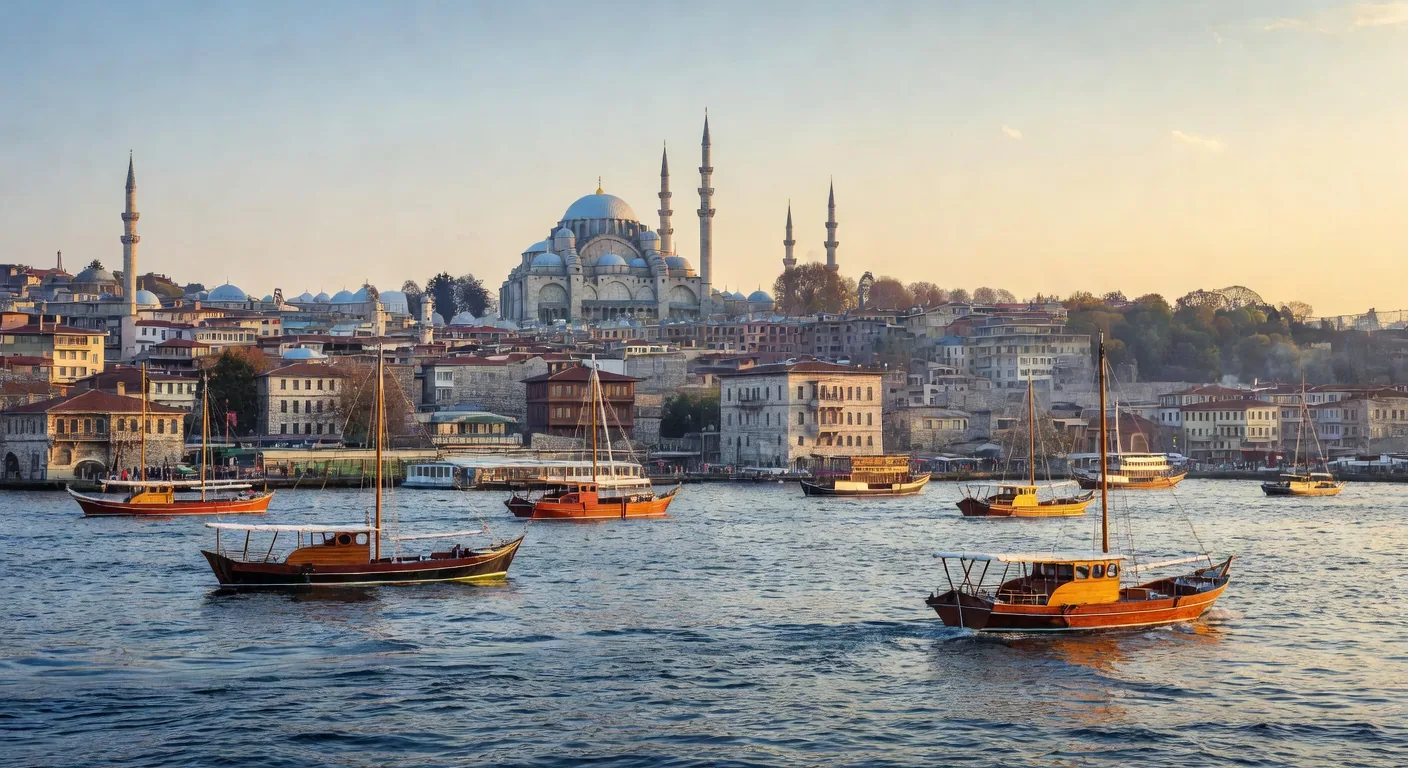
Istanbul:
The City of Two Worlds
No city on earth layers so many civilisations in one place. Constantinople became Rome's second capital, then the seat of Eastern Christianity, then the heart of the Ottoman Empire. Walking from the Hagia Sophia to the Blue Mosque is a journey through 1,700 years of unbroken urban history.
- Hagia Sophia — greatest Byzantine church, now a mosque
- Topkapı Palace — 400 years of Ottoman imperial life
- Grand Bazaar — trading since 1455 CE
- Chora Church — finest Byzantine mosaics surviving
- Archaeological Museum — treasures from across the empire